古墓丽影
China imposes anti-dumping tariffs of up to 54.3 % on US, Mexican pecans in form of deposits: MOFCOM_我的网站

一 |
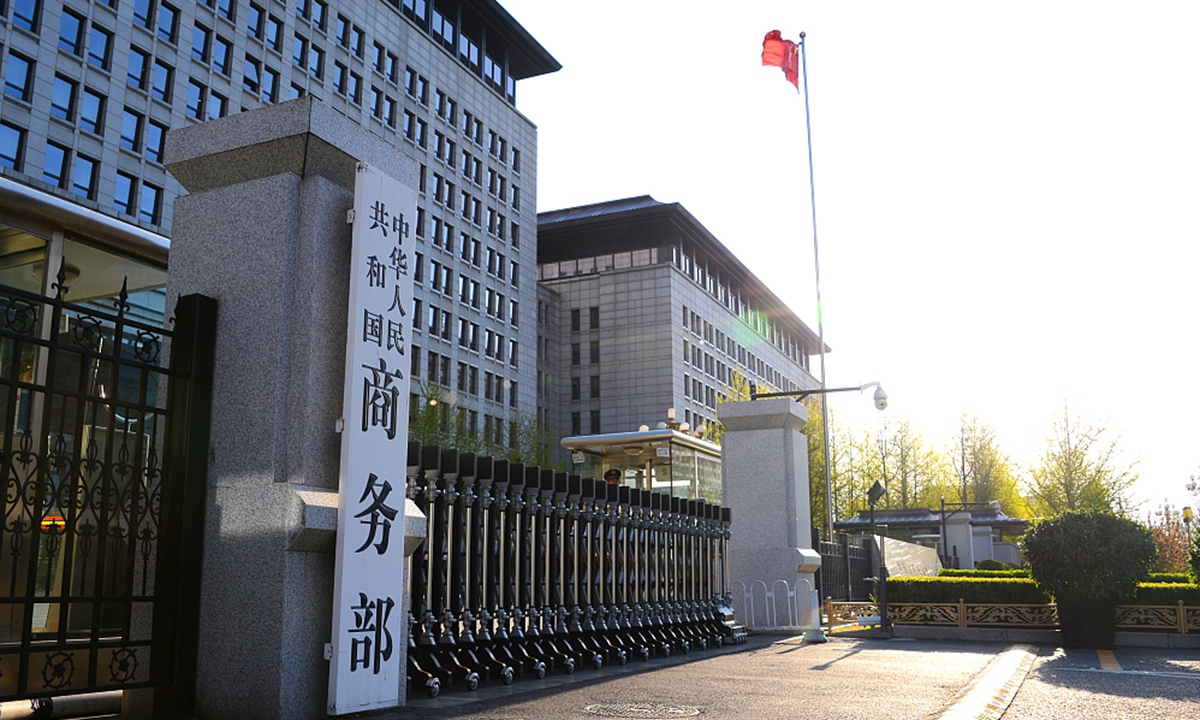
Ministry of Commerce
China on Monday decided to impose anti-dumping tariffs of up to 54.3 percent on imports of pecans (Carya illinoensis) from Mexico and the US in the form of deposits after it ruled preliminarily that imports of pecans from the two countries were dumped in the Chinese market, China's Ministry of Commerce (MOFCOM) announced.
The investigating authority found a causal link between the alleged dumping of imports of pecans from Mexico and the US and the injury suffered by Chinese producers. The ministry said it will impose provisional anti-dumping measures in the form of security deposits beginning August 11, 2026, according to an announcement on the ministry's website on Monday.
The dumping margins for Mexican companies were determined to be 17.8 percent to 51.6 percent. Since no US company has responded to the investigation, and in accordance with Chinese law and WTO rules, the dumping margin for all US companies was determined on the basis of the best information available at 54.3 percent, according to a spokesperson of the MOFCOM.
China launched the anti-dumping investigation into pecan imports from Mexico and the US on September 25, 2025, under its Anti-Dumping Regulations, according to the ministry.
A number of Mexican companies responded to the investigation, but no US companies did so.
China has always exercised caution and restraint in using trade remedy measures, and remains firmly committed to safeguarding fair and free trade, the MOFCOM spokesperson said on Monday, briefing on the preliminary ruling. China will continue to conduct the investigation in accordance with the law, fully protect the rights of all interested parties, and make an objective and impartial final ruling based on the findings of the investigation, the spokesperson said.
Pecans, also known as American walnuts or thin-shelled walnuts, are used both as snacks and in baking, and can also be processed into edible oil.
The MOFCOM spokesperson said that the ministry has conducted the investigation in accordance with the principles of fairness, impartiality, openness, and transparency, and in strict compliance with relevant Chinese laws and regulations as well as WTO rules.
The ministry said interested parties may submit written comments within 10 days of the announcement.
Global Times
。 Taipei, Oct 10 (UNI) Taiwan on Monday marked the "Double Ten" or 10 October, the self-ruled island's national day.
The annual celebration is especially significant this year -- tensions with Beijing, which claims Taiwan as its territory, are at an all-time high, reports BBC.
China's leader Xi Jinping, who has been particularly vocal about "re-unification", is set to get a third term at a historic Communist Party meeting next week.
Ironically, 10 October has nothing to do with Taiwan or any moment in its history. It, in fact, marks the day in 1911 when an uprising began in Wuchang in central China that eventually led to the collapse of the last imperial dynasty -- and the establishment of the Republic of China.
So why is Taiwan celebrating the day? Because the island's official name is still The Republic of China on Taiwan. The flags flying across Taipei today are still of the white star on a blue and red background.
It is a peculiar legacy of the Chinese civil war. In 1949, the defeated nationalist regime of Chiang Kai-shek fled across the Taiwan strait to Taipei. For decades Chiang held Taiwan in an iron grip, while continuing to proclaim his regime "the true democratic government of Free China", the BBC reported.
Today all of this seems slightly absurd -- and for so many Taiwanese, especially the younger generation, it is.
Opinion polls this year suggest that 70to 80 per cent of people here now consider themselves "Taiwanese". That is a significant increase from a decade ago, when around half the population still said they were "Chinese".
This trend has not gone unnoticed in Beijing, and it is retaliating, the report said.
Around half of the island's population now supports formal independence, even under threat of attack from China. A poll last year showed 75 per cent of Taiwanese say they would fight a Chinese invasion.
UNI MR。
Current article:http://be8egb.cousizhegaobaolengkuo.bond/list_5zlls/hzafd8.html
Published on:13:14:15





 承德多点发力打造“幸福之城”
 售24.99万起 别克GL8陆尚大定突破23000台 还有6月限时权益
 济宁:提升工会干部队伍法律素质 赋能维权服务能力
 天豪花香村酒店空调故障,以删除真实差评作为补偿的前置条件
 2026科隆展直播前瞻:全球大厂放大招!海量新作实机抢先看
 Iran's foreign minister warns Israel from Beirut it could suffer 'a huge earthquake'