8月14 日上午10点,首届世界攀联亚洲青年杯U15年龄组的决赛于细雨中在江西全南攀岩小镇拉开了帷幕。
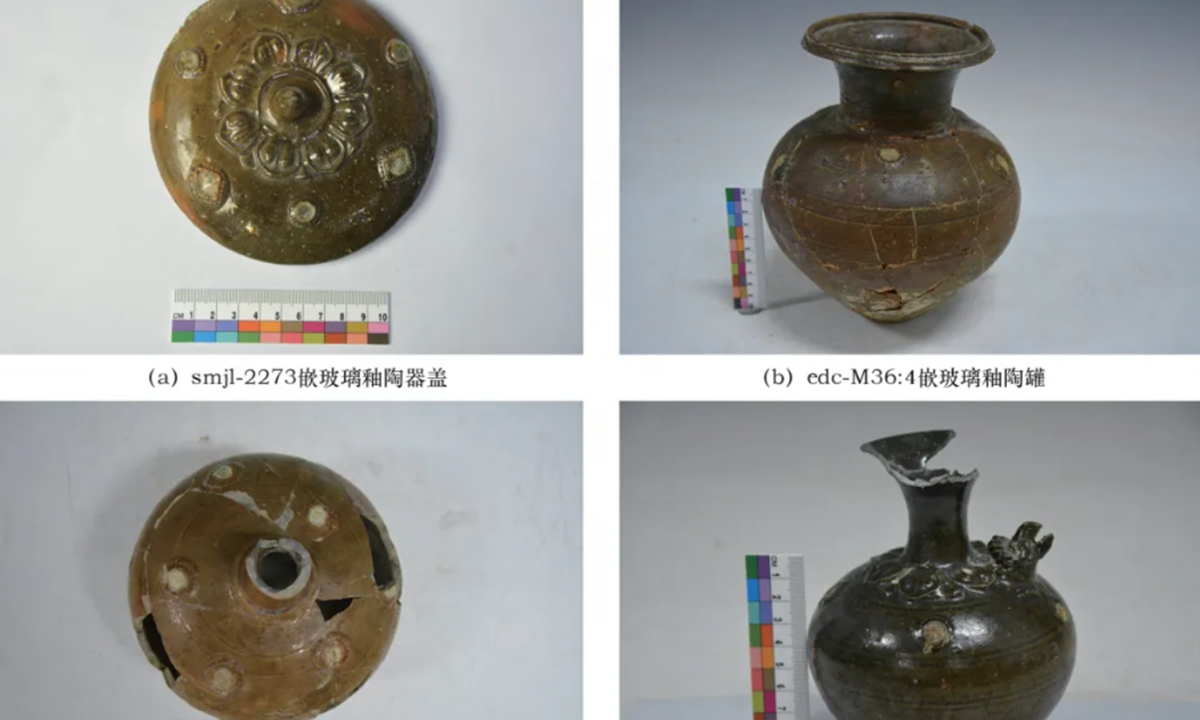
Samples of glazed pottery embedded with glass excavated from Northern Wei tombs in Pingcheng Photo: Courtesy of Shanxi Provincial Institute of ArchaeologyRare glass-inlaid glazed pottery artifacts unearthed from ancient tombs in Northwest China's Shanxi Province have provided new evidence of extensive cultural and trade exchanges between ancient China and other regions more than 1,500 years ago, according to a press release that the Shanxi Provincial Institute of Archaeology sent to the Global Times on Tuesday.
Systematic analysis conducted by the institute of pottery wares dating back to the Pingcheng period of the Northern Wei Dynasty (386-534) has identified distinct foreign cultural and technological elements embedded in the craftsmanship and material composition of the unique artifacts, shedding fresh light on ancient Eurasian cultural integration.
Established by the Tuoba Xianbei ethnic group, the Northern Wei Dynasty designated Pingcheng, present-day Datong city in Shanxi Province, as its capital from 398 to 494. For nearly a century, the city served as a pivotal multicultural hub where Xianbei nomadic culture, Central Plains Han culture and diverse Western Regions civilizations converged and interacted, according to a report on Chinanews.com.cn.
Archaeological excavations at multiple tomb clusters in Pingcheng, including the Dongxin Northern Wei cemetery and the Qilicun cemetery, have yielded a total of eight pieces of glass-inlaid glazed pottery. Though far fewer in number compared with common glazed pottery figurines and painted glazed wares, these artifacts feature an extremely rare inlay technique unseen elsewhere in the developmental history of Chinese ceramics, according to the press release.
Given the exceptional rarity and good preservation of the relics, researchers selected four representative pieces for comprehensive laboratory testing and material analysis. The results show that the glass inlays are primarily soda-alumina glass, most likely produced by remelting trade beads from the Indian Ocean and Pacific regions, a key commodity in ancient maritime and overland trade networks.
The findings confirm that Pingcheng maintained frequent cross-border trade and cultural communication during the Northern Wei era, with access to glass raw materials sourced from diverse overseas regions. The varied compositional characteristics of the inlaid glass provide crucial clues for studying ancient glass-making technologies, raw material circulation and long-distance trade routes in ancient East Asia, the press release noted.
Beyond material composition, the artifacts also embody prominent cross-cultural innovation in design. Their decorative motifs draw heavily on gem-encrusted gold and silver wares of the Sasanian Persian Empire, while integrating artistic elements from other Eurasian regions. The blended design styles reflect the era's prevailing trend of multicultural fusion and creative assimilation of foreign civilizations.
Archaeologists noted that the glass-inlaid glazed pottery represents an innovative technological achievement crafted by Northern Wei artisans who absorbed and refined foreign techniques and aesthetics. The distinctive craftsmanship and stylistic features of these wares exerted a far-reaching influence on ceramic production in surrounding regions and subsequent dynasties, marking a vital chapter in the evolution of ancient Chinese ceramic art.
The research underscores that ancient China's northern borderland was not an isolated cultural enclave, but an active node in Eurasian cultural and trade exchanges, where foreign elements were localized and innovated to form unique regional civilizational achievements, archaeologists from the Shanxi Provincial Institute of Archaeology said.
。经过近两个小时的激烈角逐,来自浙江宁波的王沐易在最后一条线路实现逆转,“绝杀”两位日本选手,成功获得U15女子组的冠军,也成为了亚青杯历史上第一位金牌获得者。王沐易获得U15攀石女子组决赛冠军在稍后结束的U15男子组比赛中,预赛排名第一的中国小将段云泷获得亚军,日本选手伊藤湊获得冠军。

B | 段云泷在比赛中也同样面对了两位日本选手的夹击。最终,他成功获得亚军。日本选手上田大志获得这个年龄组的第三名。段云泷获得U15攀石男子组决赛亚军14日晚上进行的U17比赛中,中国队再添一金。

C | 出生于2010年的穆泽润凭借着在最后一条线路的出色发挥,后来居上,拿到男子组的冠军。

D | 另一位中国选手王天宇获得第三名。获得亚军的则是日本运动员长尾一树。穆泽润获得U17攀石男子组决赛冠军在U17女子组的比赛中,韩国选手尹春一路领先,成功夺冠。预赛排名第一的中国小姑娘蒋晨曦顽强追赶,最后时刻逼近对手,荻得亚军。日本选手高桥葉获得第三名。

E | 参加U15年龄组比赛的王沐易2013年出生于浙江宁波,实际年龄只有13岁,全南也是她首次参加青年组的比赛。在一天前进行的预赛中,王沐易排在第三位。

F | 来到决赛,小姑娘表现出了更好的竞技状态,第一条路便成功登顶。但两位晋级决赛的日本选手高久春树及广濑堇也同样表现出色,并且两人在率先完成4条线路的攀爬后得分位列第一、第二,将压力给到了还剩下最后一条线路的王沐易身上。值得肯定的是,压力面前,王沐易没有动摇,而是经过几次尝试之后,顺利完成最后一条线路的攀爬,成为当天所有参赛选手中唯一一位完成全部4条线路的选手,理所当然地站到了最高领奖台。首次参加青年级别的比赛便夺得亚青杯历史上的第一枚金牌,王沐易在感到高兴的同时,还是很谦虚地只给自己的表现打了8分。

G | 在她看来,自己能够夺冠一方面是自己清晰分析线路并顺利攀爬的结果,一方面也与现场凉爽的天气适合运动员的发挥有着一定的关系。

H | 不过,依然还是在妈妈的陪伴下参加比赛的王沐易很快便“很成熟”地表示:自己将很快忘记攀石的比赛,将精力集中到接下来的难度比赛。其所属的宁波ROCKPLUS 俱乐部则表示未来将为其创造更好的训练条件,以帮助她获得更大的进步,取得更好的成绩。